1
Upload fluorescence data
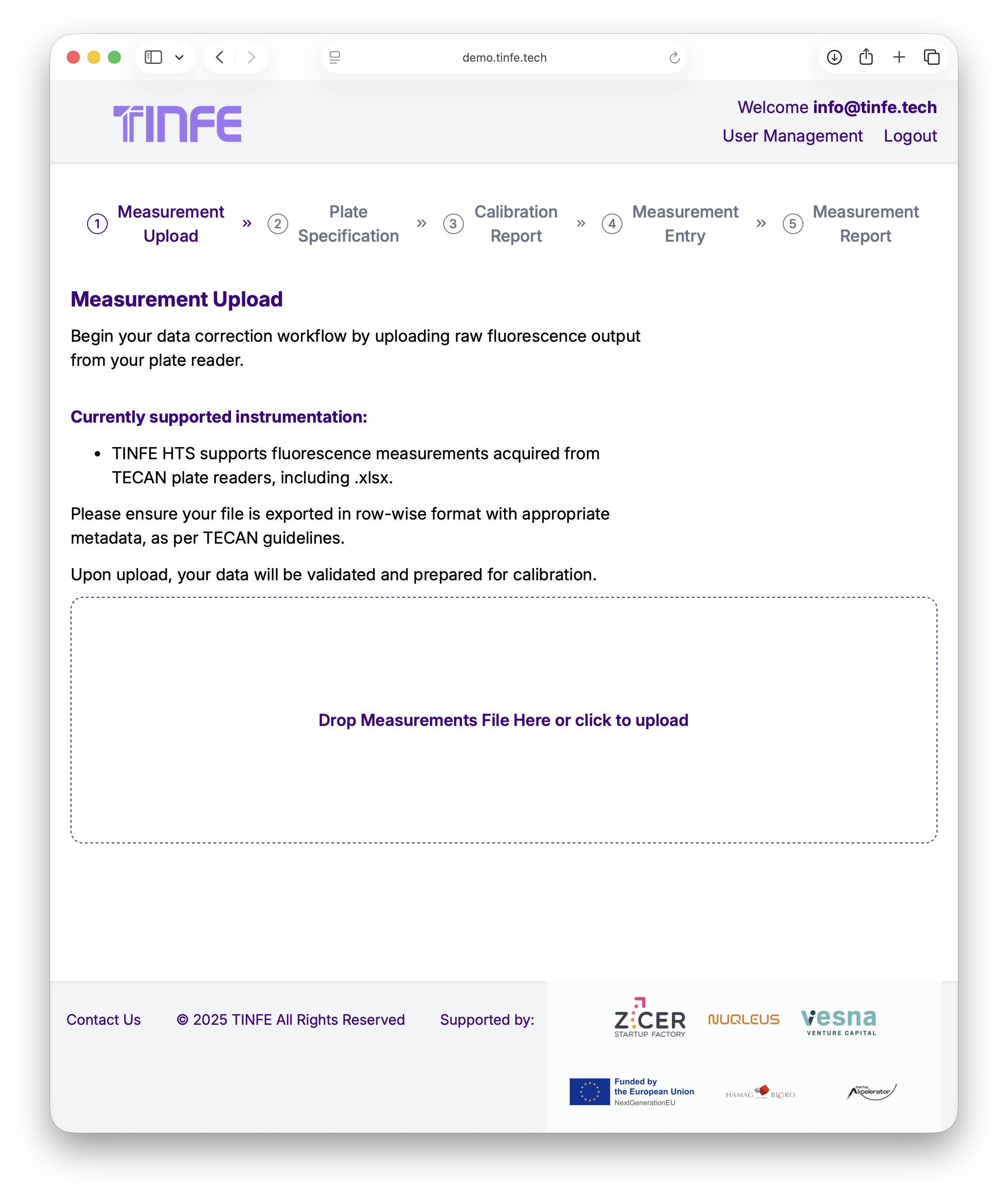
Upload fluorescence data generated on a standard microplate reader without modifying assay protocols, instrumentation, or sample preparation procedures.
TINFE detects and removes inner filter effects directly from microplate reader data to restore linear, quantitative results. No additional sample handling. No hardware changes. No reruns.
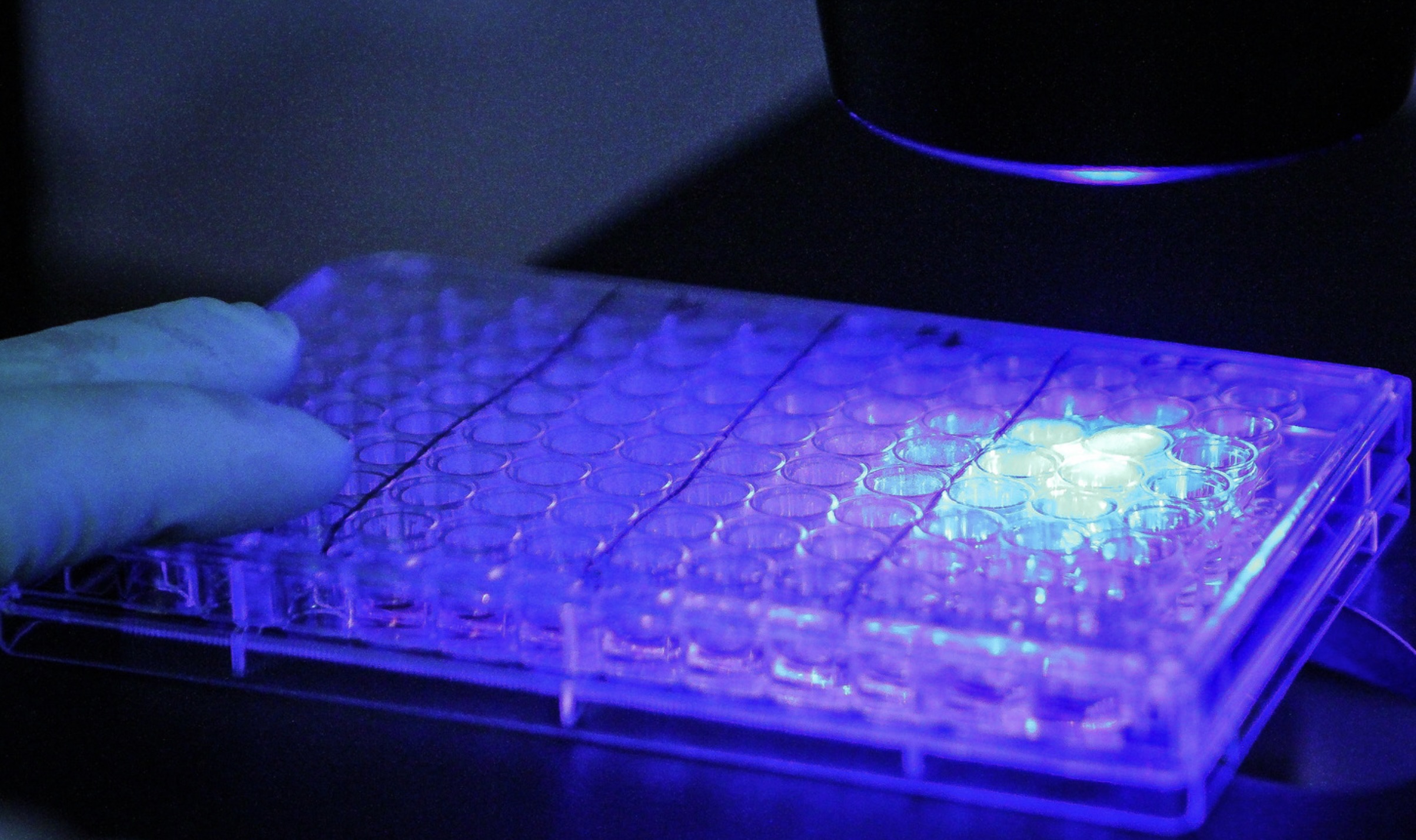
Every fluorescence assay is vulnerable to signal distortion caused by the Inner Filter Effect (IFE), where excitation and emission light is absorbed, reabsorbed, or attenuated within the sample.
The inner filter effect (IFE) is inherent to fluorescence measurements and depends on sample absorbance and well geometry.
Standard fluorescence measurements are limited to a total absorbance of A < 0.05. Beyond this point, IFE causes significant signal attenuation and non-linear distortion. Validated for absorbance values up to A = 2 and experimentally evaluated beyond A = 5, TINFE maintains linear accuracy in samples at least 40x more concentrated than traditional methods allow.
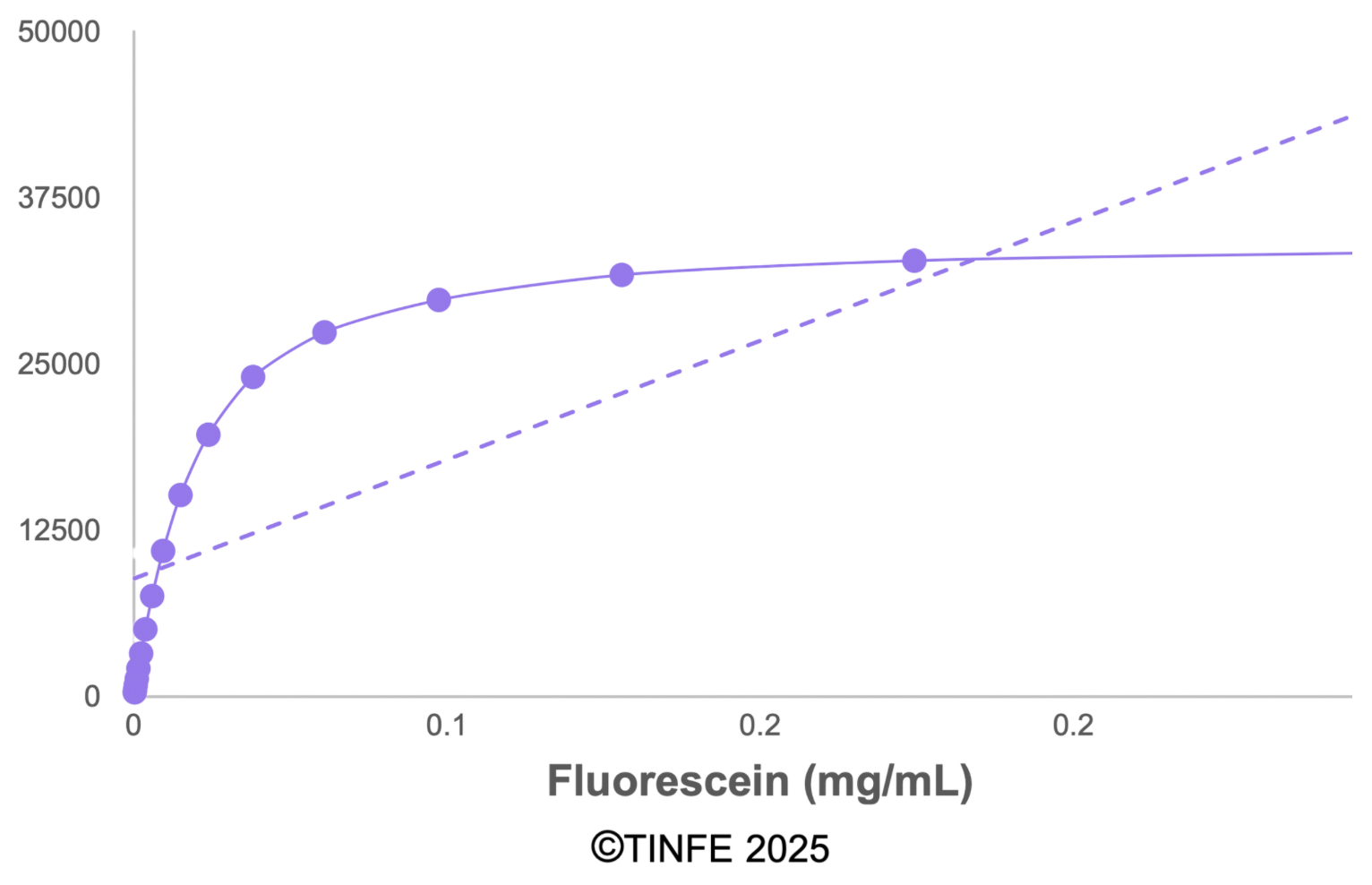
Fluorescein dilution series showing non-linear fluorescence response at higher concentrations, deviating from the expected linear relationship.
In high-throughput workflows, even small distortions propagate across entire plates—affecting data quality, downstream analysis, and decision-making.
TINFE automatically detects and corrects inner filter effects directly from fluorescence measurement data. It restores linear, quantitative results without dilution, re-measurement, or hardware changes.
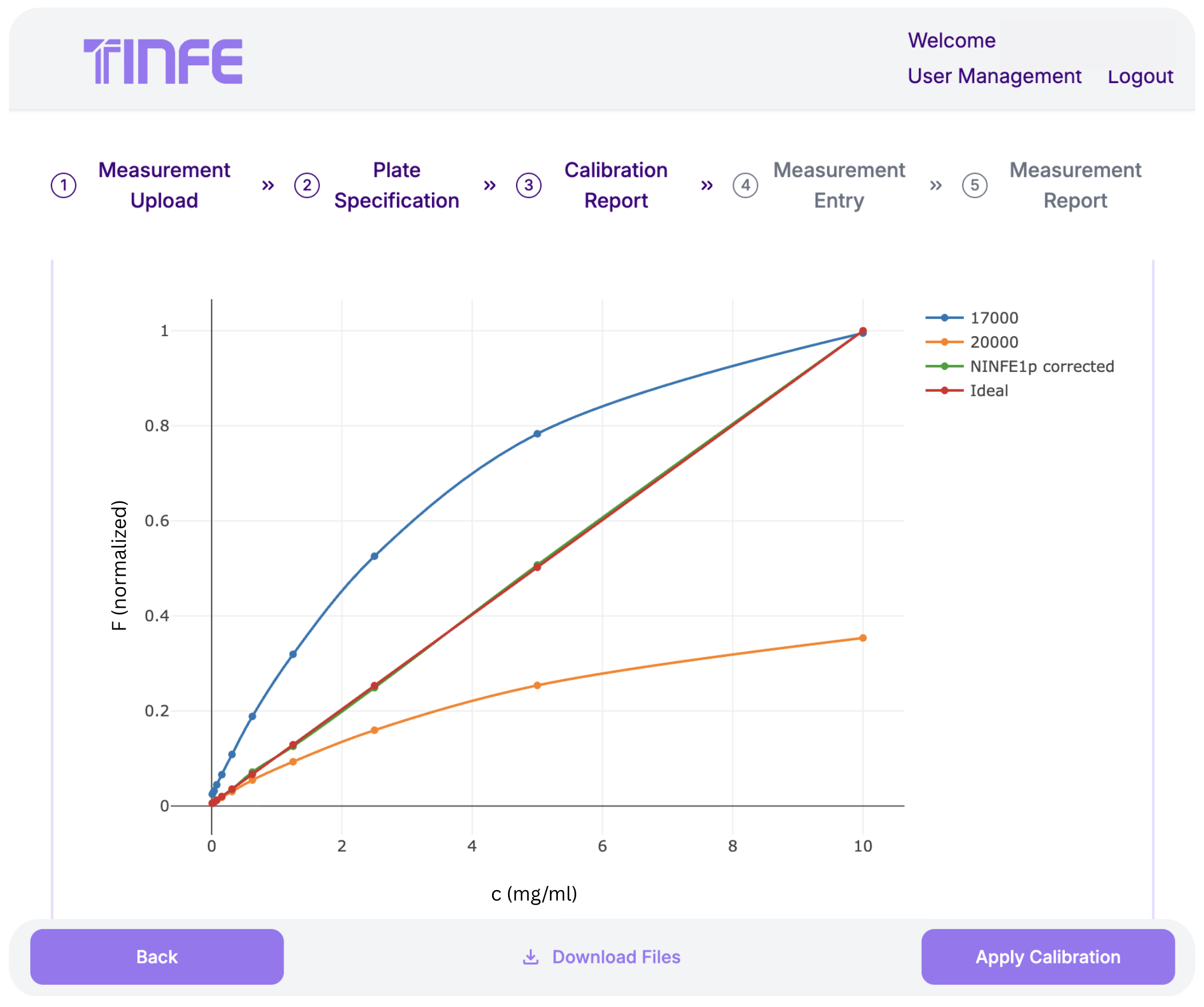
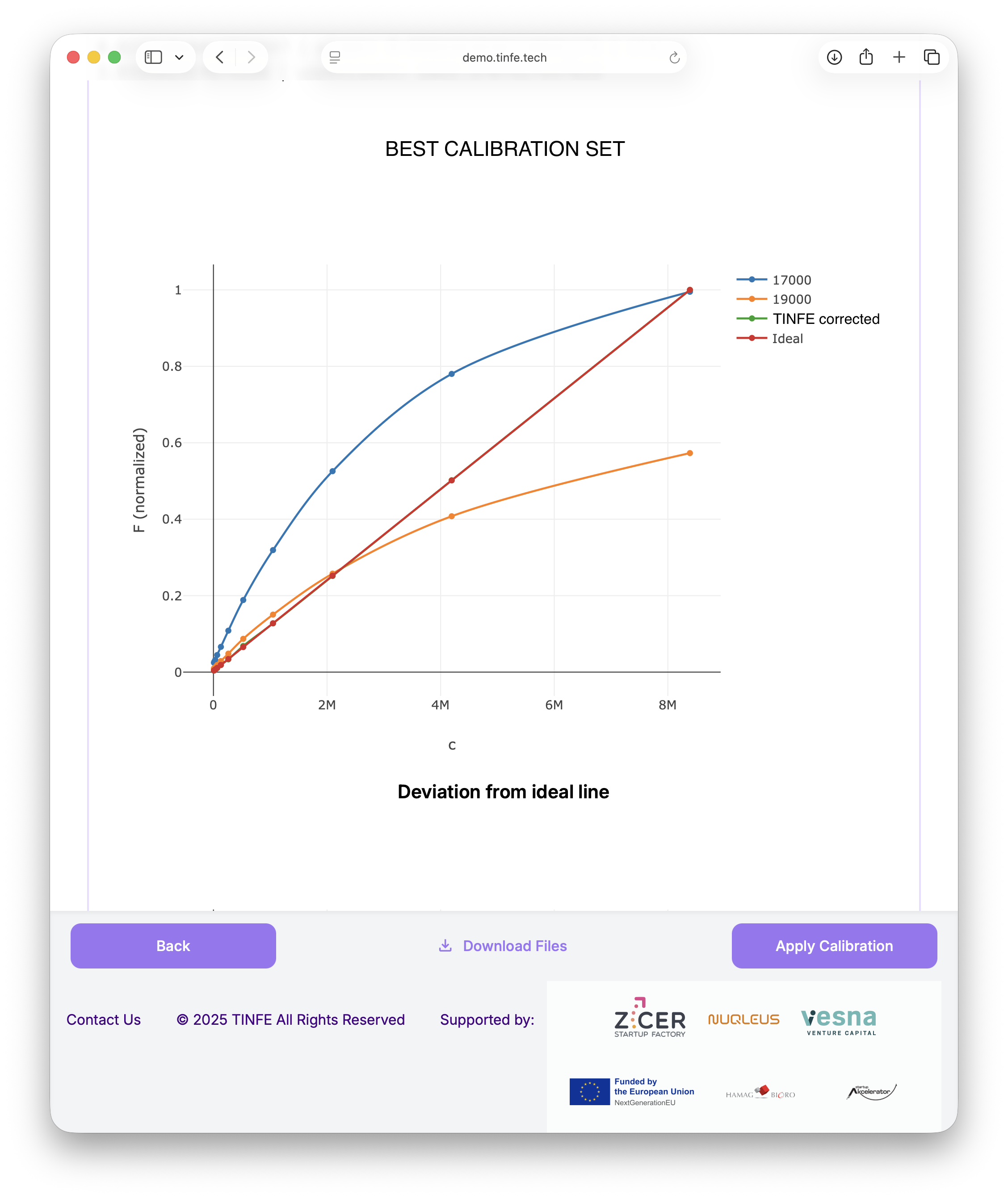
Screenshot of the TINFE SaaS interface showing fluorescence correction for human serum albumin samples. Uncorrected signals (blue, orange) are non-linear due to inner filter effects, while the corrected response (green) aligns with the ideal linear reference (red). At 10 mg/mL, total sample absorbance reaches A ≈ 5.5 (normalized to a 1 cm optical path length).
TINFE uses physics-based modelling of excitation and emission attenuation to detect and correct distortion within each well—producing signals that reflect true fluorescence intensity across an increased dynamic range.
TINFE applies a standardized calibration and readout workflow for fluorescence measurements acquired on standard microplate readers. Compatible with top-reading fluorescence microplate readers supporting variable Z-position measurements.* The platform performs empirical inner filter effect correction, evaluates calibration quality, and generates traceable quantitative results.
Bring existing fluorescence measurements into a standardized analysis workflow.
Establish the analytical context required for quantitative interpretation.
Validate correction performance before analysing unknown samples.
Generate traceable quantitative results for downstream analysis and reporting.
*Actual instrument data format depends on vendor and software version. Custom formatting or integration may be required in some cases.
Upload fluorescence data generated on a standard microplate reader without modifying assay protocols, instrumentation, or sample preparation procedures.
Identify calibration standards, controls, blanks, and unknown samples so that fluorescence measurements can be linked to known concentrations and assay-specific requirements.
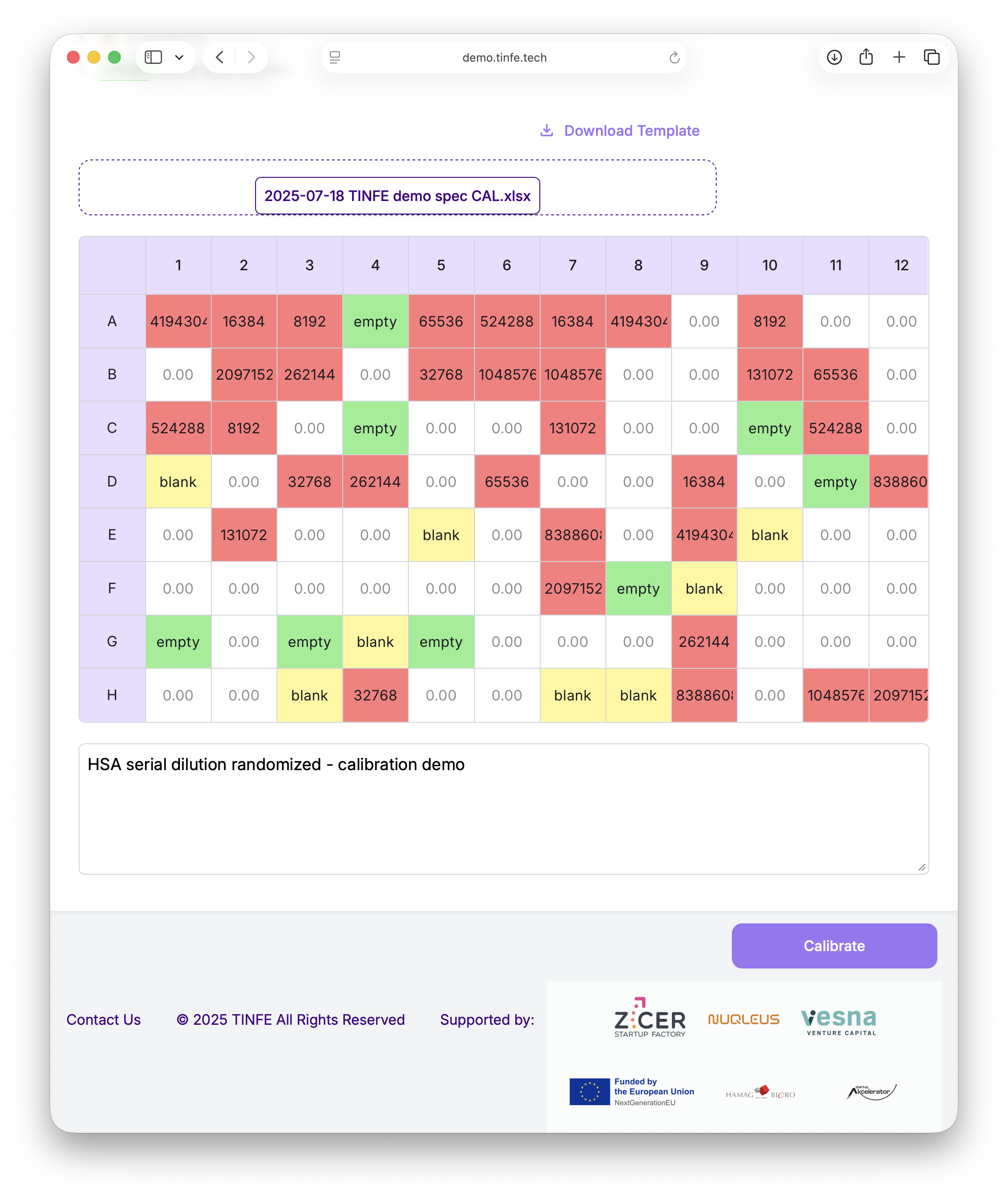
TINFE identifies optimal measurement conditions, applies empirical inner filter effect correction, and evaluates calibration quality using statistical and regression-based metrics.
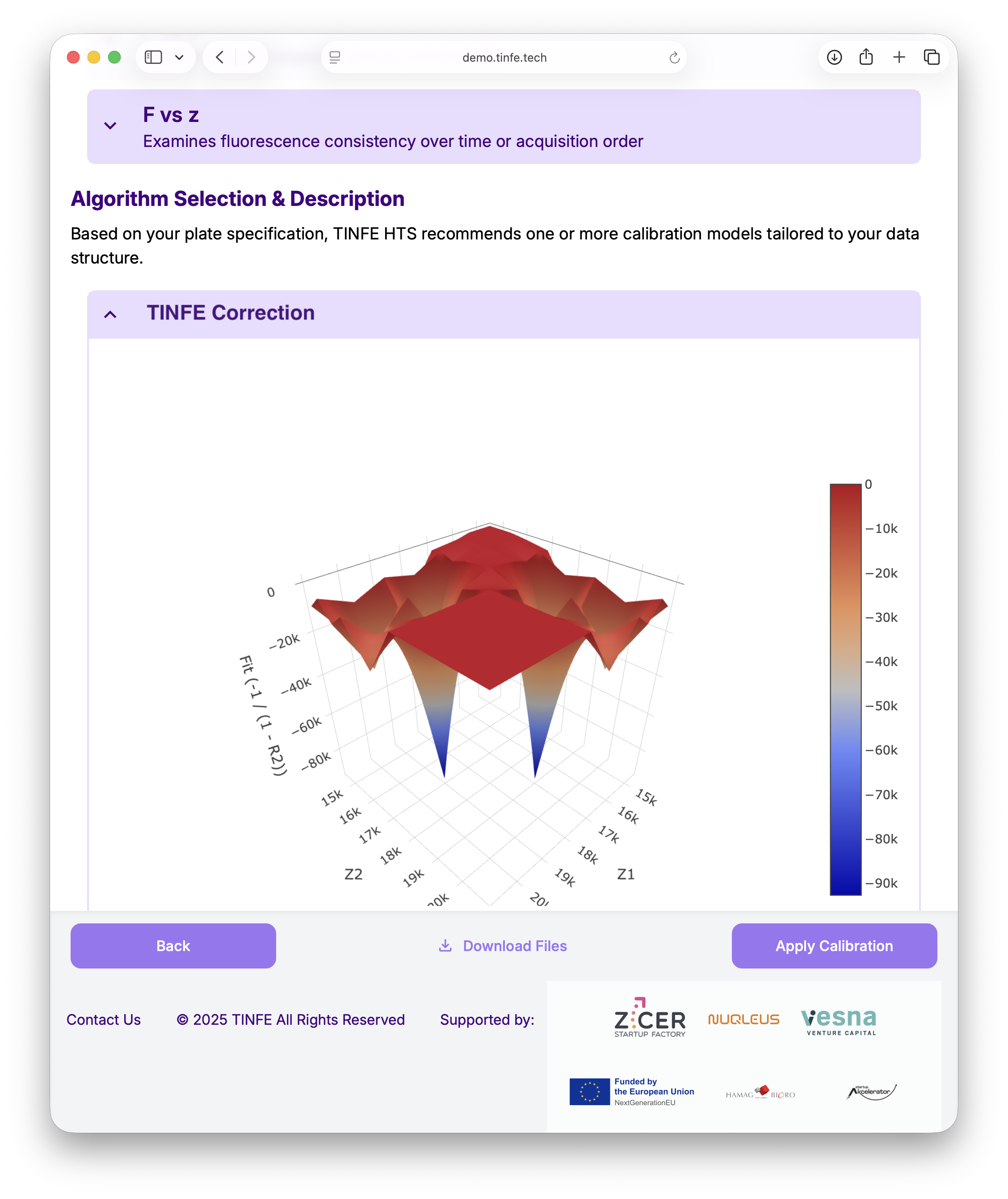
Review correction quality, apply validated correction parameters to unknown samples, inspect calculated concentrations, and export corrected data together with supporting documentation.
Conventional approaches either reduce throughput, require additional measurements, or increase cost. TINFE corrects inner filter effects directly from existing data, preserving both throughput and reproducibility.
| Feature | TINFE | Dilution | Absorbance-based correction | Short-path optics |
|---|---|---|---|---|
| Restores linear response at high concentration | ✓ | ✓ | partial | partial |
| No changes to assay protocol | ✓ | ✕ | ✕ | ✕ |
| No additional sample preparation | ✓ | ✕ | ✕ | ✓ |
| No additional measurements required | ✓ | ✕ | ✕ | ✓ |
| Compatible with existing plate workflows | ✓ | ✓ | partial | ✕ |
| Works across fluorophores and matrices | ✓ | ✓ | partial | partial |
| Scales to high-throughput workflows | ✓ | ✕ | partial | ✕ |
| Suitable for automated workflows | ✓ | partial | partial | ✕ |
In practice, these differences influence throughput, resource consumption, and the overall cost of fluorescence workflows.
Improve resource efficiency while maintaining audit-ready outputs.
Obtain cleaner, more reliable data across assay development stages.
Generate publication-quality results using standard plate readers.
Correct inner filter effects in coloured or turbid matrices.
Improve signal reliability and traceability in assay development workflows.
Support consistent, reproducible measurements across batches.
*For research use only. Not for use in diagnostic procedures.
TINFE applies physics-based correction with built-in validation and traceability. It converts distorted fluorescence signals into reliable quantitative data, helping teams reduce reruns, save time, and improve data quality without changing their workflow.
TINFE applies empirical correction to real measurement data, compares corrected and uncorrected results, and provides statistical outputs to support interpretation.
Every correction step is documented. Original data remain available, corrected outputs are traceable, and final results are curated by the user for publication, quality control, or internal review.
TINFE is designed to integrate into existing laboratory workflows, reduce avoidable errors, and support consistent data quality across fluorescence-based assays.
TINFE makes fluorescence measurements more trustworthy. Founded in 2024 as a University of Zagreb Faculty of Pharmacy and Biochemistry spin-out, TINFE corrects systematic optical distortions with a focus on the inner filter effect (IFE).
By combining academic expertise with product-driven development, we address persistent data-quality problems in everyday laboratory workflows—helping teams rely on their fluorescence data without changing instruments or sample handling.

We work directly with laboratories, validate on real datasets, and document algorithm updates to support traceable, reproducible results.
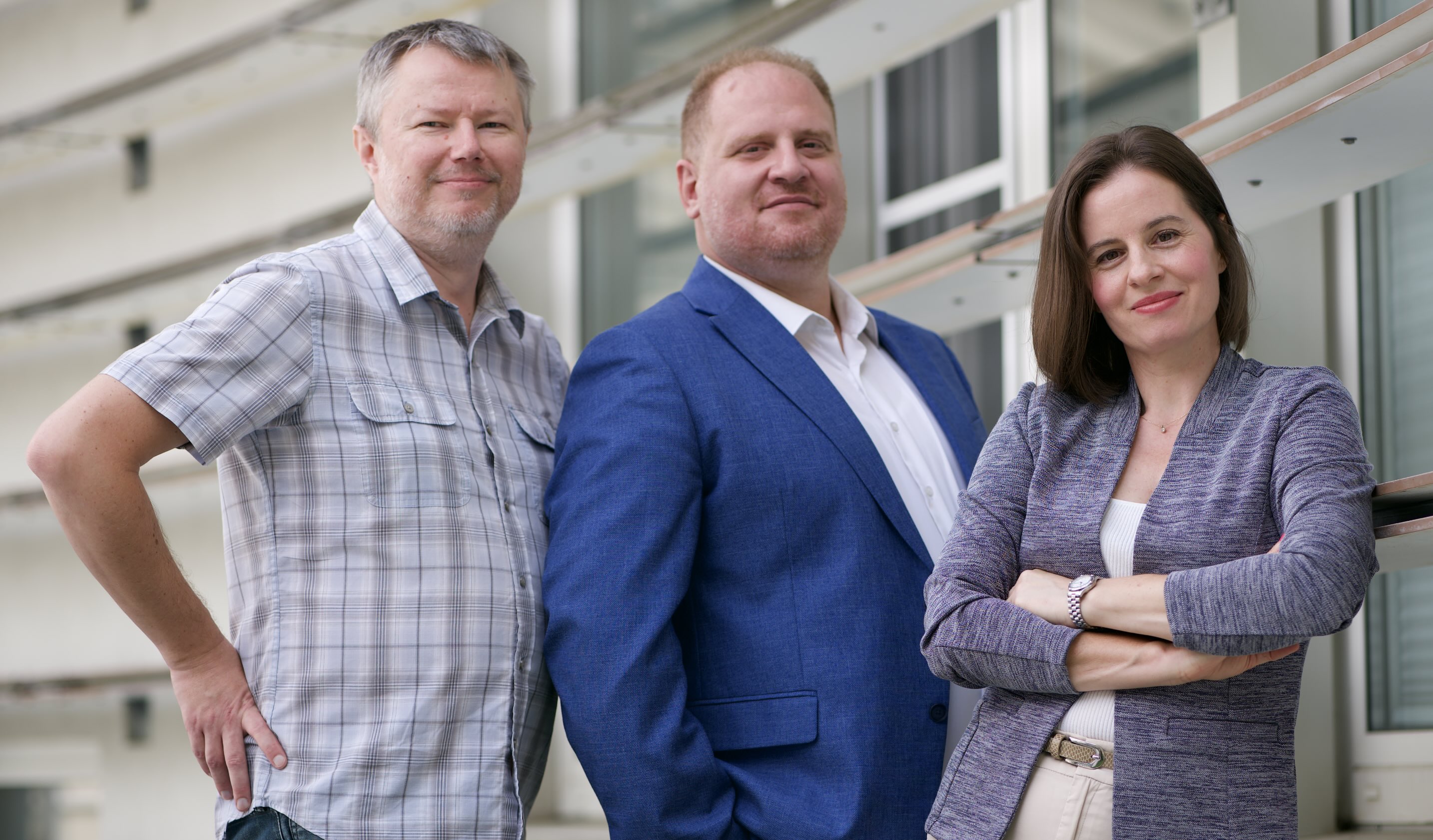
Tin Weitner, PhD
CTO
Davor Šakić, PhD
CEO
Dunja Horvat Weitner
COO
BRIGHT - Digital Platform for Fluorescence Signal Correction and Data Integrity (DIGIT.2.2.01.012) is a validation project focused on demonstrating the performance, usability, and commercial readiness of TINFE’s reader-agnostic platform for fluorescence signal correction and data integrity.
TINFE HTS llc received funding through the DIGIT Project Seal of Excellence Synergies Program to validate a digital platform that corrects fluorescence signal distortion directly from standard microplate reader data. The project builds on a proposal that received a Seal of Excellence under HORIZON-WIDERA-2025-02-ACCESS-01 - EIC Pre-Accelerator for Widening Countries, recognising it as a high-quality proposal in a competitive European evaluation process.
The objective of BRIGHT is to validate a reader-agnostic platform for fluorescence signal correction and data integrity in representative laboratory environments, advancing the technology toward broader adoption in research and industrial applications.
BRIGHT is supported through the Digital, Innovation and Green Technology Project (DIGIT Project) under the Seal of Excellence Synergies Program. The programme supports the validation and commercialisation of high-quality research and innovation projects originating from Horizon Europe proposals and is implemented by the Ministry of Science, Education and Youth with support from the Croatian Science Foundation.
TINFE is seeking pilot partners from academic, CRO, industrial, environmental, food-testing, and diagnostic research laboratories to evaluate a software platform for correction of inner filter effects (IFE) in fluorescence measurements.
The pilot program is designed to validate TINFE under real laboratory conditions using standard microplate reader workflows and existing assay protocols. Participating laboratories may evaluate routine operating conditions as well as challenging high-absorbance, coloured, or scattering sample matrices where fluorescence quantification often becomes unreliable.
Pilot partners contribute to the technical validation of a new approach for fluorescence data correction. Selected partners may be invited to contribute to technical white papers, case studies, conference presentations, or peer-reviewed publications.
Complete the Pilot Partner Interest Form to describe your assay system, laboratory environment, and validation objectives. We will review your submission and contact selected applicants to discuss pilot participation.
Join the pilotReference Number: NPOO.C1.1.2.R2-I4.01.0076
The project "TINFE programski paket" was implemented under the National Recovery and Resilience Plan (NPOO 2021–2026) within the call "Jačanje akceleracijske aktivnosti".
The primary goal of the project was to advance the development, testing, and validation of the TINFE reader-agnostic software package, expanding its commercial readiness and capabilities for automated inner filter effect correction in microplate reader workflows.



Financira Europska unija – NextGenerationEU. Izneseni stavovi i mišljenja samo su autorova i ne odražavaju nužno službena stajališta Europske unije ili Europske komisije. Ni Europska unija ni Europska komisija ne mogu se smatrati odgovornima za njih.
Short, practical articles for teams working with fluorescence data, assay development, and inner filter effect correction.
Book a live walkthrough (15–30 min) with our scientific team. Use your own data or use our example datasets.
Based on your current plate volume, rerun rate, and operating costs, estimate how much time and material cost TINFE can save by eliminating inner-filter-effect reruns.
Default: 1 plate per workday
Default: 96 wells × €5 per well
Cost saved (material only)
€0
Cost saved (time to re-run)
€0
Total cost saved
€0
Total time saved
0 hrs
Estimates are illustrative and depend on assay design, workflow, rerun rates, and operating costs. Enter your own values for a more accurate estimate.
Used by research institutions



TINFE is supported by European innovation initiatives, digital transformation projects, and startup programs focused on scientific excellence, technology transfer, and sustainable growth.















This operation benefits from support from the European Union under the InvestEU Fund and NextGenerationEU. Views and opinions expressed are those of the authors only and do not necessarily reflect those of the European Union and any other listed partner. Neither the European Union, and any other listed partner, nor the granting authority can be held responsible for them. Financira Europska unija – NextGenerationEU. Izneseni stavovi i mišljenja samo su autorova i ne odražavaju nužno službena stajališta Europske unije ili Europske komisije. Ni Europska unija ni Europska komisija ne mogu se smatrati odgovornima za njih.